Can be cut and moulded into any shape or form
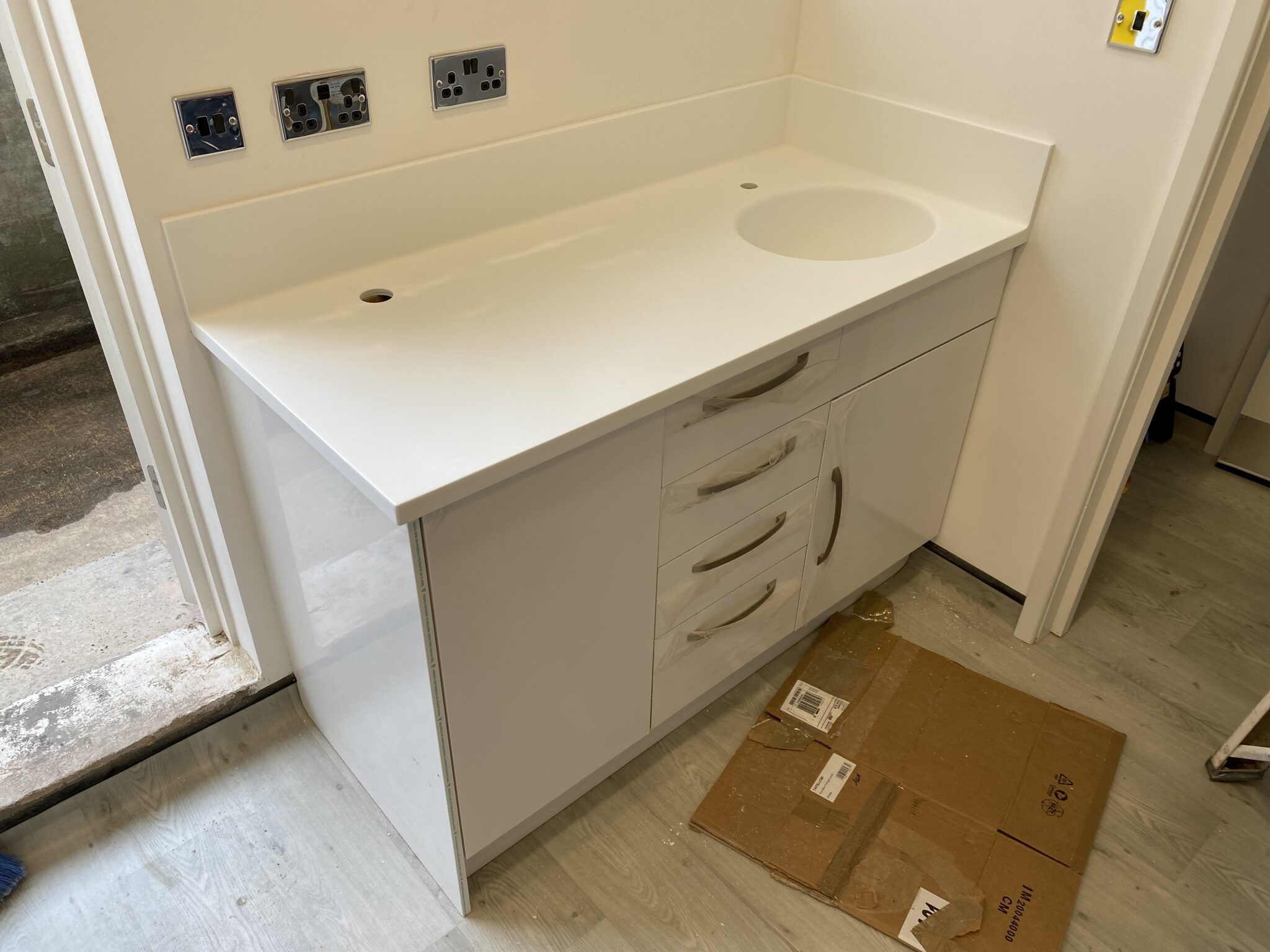
a perfect match for dental surgery worktops with inset sinks

We specialise in solid surface worktops for dental and healthcare environments across the UK.
Whether you are fitting out a new surgery, refurbishing a decontamination room, or upgrading a dental laboratory, we supply, fabricate and install to the exact requirements of your space.
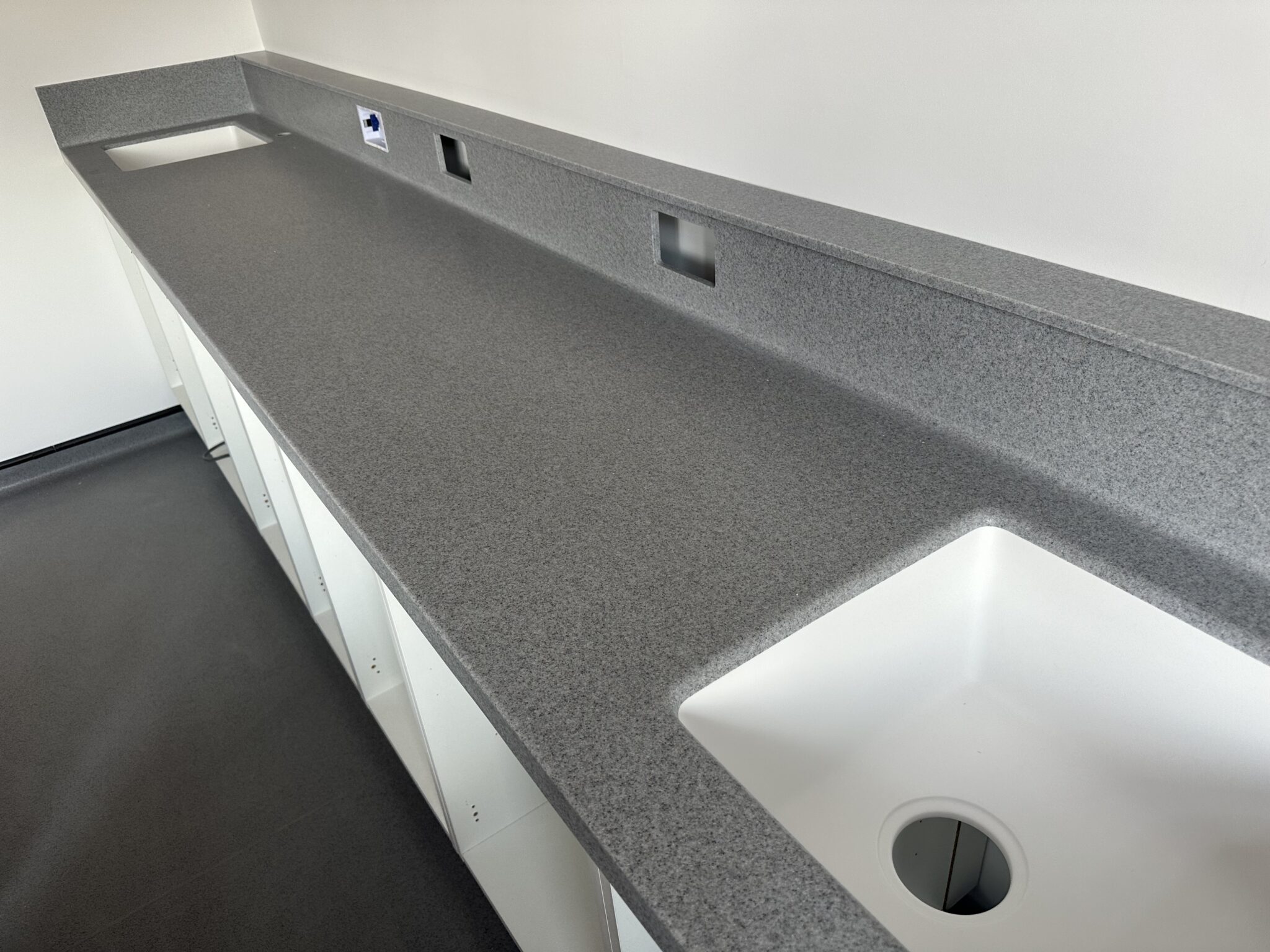
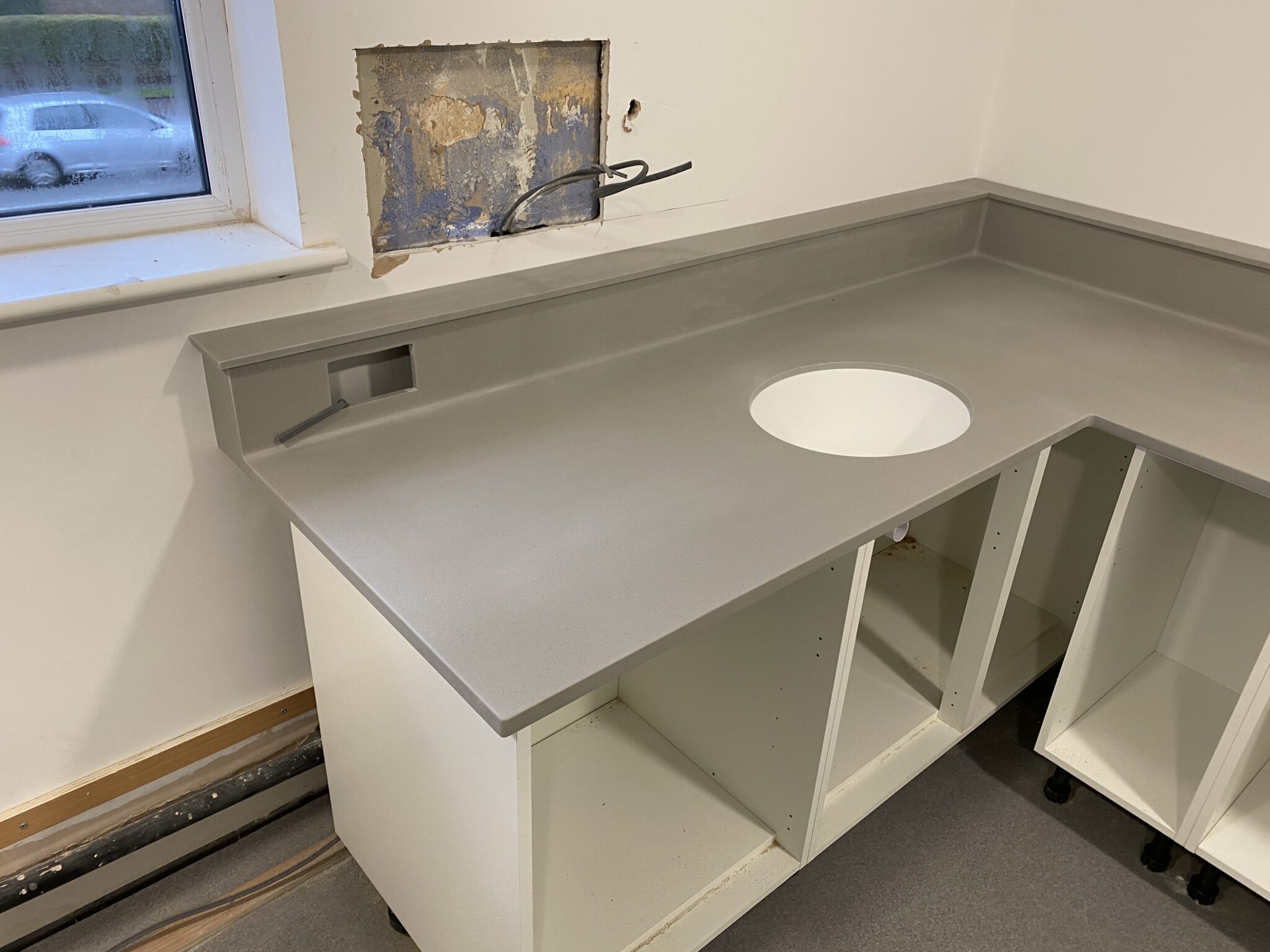
Every worktop is templated on site and manufactured to order — not cut from stock. Integrated sinks are bonded seamlessly to the underside of the worktop with no rim gap.
Upstands are coved from the same sheet material, eliminating the wall-to-worktop junction entirely. The result is a continuous, non-porous surface with no edges, joins or corners where contamination can accumulate.
We work with dental practices, healthcare providers and refurbishment contractors throughout England. Our team handles the full process from initial survey through to completed installation.


we prioritize the crucial requirements of dental worktops in maintaining hygiene and supporting effective decontamination processes. Our surfaces are meticulously crafted from durable, non-porous materials such as stainless steel, solid surfaces, or high-grade laminates, chosen for their resistance to moisture, stains, and chemicals. With sealed surfaces and inconspicuous joins, we ensure a sterile environment by preventing the accumulation of dirt and bacteria.
We understand the importance of ease of cleaning and compatibility with dental equipment, ensuring smooth surfaces and adequate space for safe operation and ventilation. Our ergonomic designs minimize physical strain on staff, enhancing efficiency during decontamination procedures. Integrated sinks and seamless splashbacks further contribute to hygiene, while light-coloured finishes facilitate thorough cleaning by enhancing visibility of contamination and debris.
At Prestige Work Surfaces, our commitment is to deliver worktop solutions that excel in hygiene, durability, and functionality, supporting the critical task of instrument decontamination in dental practices. Partner with us for surfaces designed to meet the rigorous demands of dental environments, ensuring a safe and efficient workspace for your staff.
The dentistry worktops should be made of non-porous, durable materials that can withstand frequent cleaning and disinfection. Stainless steel, solid surface materials, or high-grade laminates designed for healthcare environments are preferred due to their resistance to moisture, stains, and chemicals.
All joints and seams in the worktop should be sealed to prevent the accumulation of dirt, bacteria, or other contaminants. This includes areas where the worktop meets walls or other surfaces. Sealing helps in maintaining a sterile environment by eliminating spaces where germs can hide and multiply.
The surface should be smooth and free from any texture that could trap particles or make cleaning difficult. It should not react with common disinfectants and cleaning agents used in dental practices. The ability to easily remove debris and contaminants without causing damage to the worktop is essential.
The worktops must be resistant to scratches, impacts, and heat, which could compromise the sterile environment. The durability of the material ensures that it can withstand the daily rigors of dental practices, including the handling of heavy equipment and exposure to high temperatures during sterilization processes.
The worktop design should accommodate the specific needs of dental decontamination equipment, such as autoclaves, ultrasonic cleaners, and sealing machines. Adequate space for safe operation, ventilation, and access for maintenance is necessary.
To facilitate ease of use and minimize physical strain on staff, the worktop height should be considered based on the average user’s comfort. An ergonomic design reduces the risk of repetitive strain injuries and improves the efficiency of decontamination procedures.
Where sinks are integrated into the worktop, they should be seamlessly welded into the countertop or undermounted to avoid crevices where bacteria can accumulate. The design should ensure that water does not pool on the surface but drains efficiently.
To protect walls and surrounding areas from water damage and contamination, splashbacks made of the same material as the worktop can be beneficial. These should also be sealed and easy to clean.
Light-coloured worktops can make it easier to see contamination and debris, ensuring thorough cleaning. However, the choice of colour and finish should balance practicality with the overall aesthetic of the dental practice.
These are a few of the dental surgery worktop installations we have completed.
Send us your quote & plan and we’ll try our best to beat it. We also offer a range of work surfaces from HIMACS, Staron, Hanex, Tristone as well as Corian, so your quote can be tailored to your budget.
A: Dental surgery worktops must be non-porous throughout – including at edges and joins – to prevent bacterial contamination and withstand repeated use of clinical disinfectants such as sodium hypochlorite and isopropanol.
Standard kitchen worktops, including laminate, are not suitable for clinical dental use because their substrate is porous and their surface layers can delaminate under chemical cleaning.
A: Yes. Dental surgery environments are subject to CQC requirements, GDC standards and HTM 01-05 guidance on decontamination in primary care dental practices.
HTM 01-05 specifies non-porous, easy-clean surfaces that are resistant to clinical disinfectants. All the solid surface materials we supply – including LG Hi-Macs, Corian and Staron – meet these surface requirements.
A: Yes. Integrated sinks are standard on our dental surgery worktops.
The sink is bonded directly to the underside of the worktop using the same solid surface material, with no rim gap. This eliminates the most common contamination trap on any clinical surface and makes the whole assembly straightforward to clean.
A: A coved upstand replaces the standard right-angle junction between the worktop and the wall.
Instead of a 90-degree corner – which is difficult to clean thoroughly – a cove curves the worktop material up the wall in a smooth radius. This eliminates the corner entirely.
Coved upstands are recommended best practice in dental surgeries and required in decontamination rooms under HTM 01-05.
A: Yes. One of the key advantages of solid surface over all other worktop materials is that scratches, scorch marks and impact damage can be sanded out and the finish restored on site without replacement.
This applies to all the brands we supply — LG Hi-Macs, Corian, Staron and others. No other clinical worktop material offers this level of repairability.
A: We can supply dental surgery worktops in any of the leading solid surface brands – including Corian, LG Hi-Macs, Staron, Hanex and Tristone – all of which are NSF certified and meet the clinical performance requirements for dental use.
Our recommendation is LG Hi-Macs: it delivers the same quality and longevity as Corian at a more competitive price point, making it excellent value for money across a full surgery fit-out.
That said, if you have a preference or an existing specification, we will work with whichever brand suits your project.